
ECIF Conference 2025: innovating from seed to field, through space
Agriculture faces endless challenges. But there are also endless solutions out there!
At this year’s ECIF Conference, we will be taking you on a journey through time, land and space to discover what some of those innovative solutions are and how they are making a difference in the sector.
We will also be considering how innovation grows from being an idea to an actual product or service, and how they are made accessible to end-users.
Be inspired by speakers who will share how they are innovating to tackle agriculture’s most pressing issues.
Meet early-career individuals from other areas of agriculture and horticulture, and meet agricultural researchers from the University of Reading.
Who is this event for?
We welcome early-career individuals from a variety of backgrounds including research, agronomy, engineering, consultancy, farming and tech development.
Whether you’ve recently graduated, are at the beginning of your professional career, are embarking on graduate/further education studies, or are new to agriculture, come and learn about agricultural innovations.
Why should I attend?
- Farmers – see how you can shape the tech of tomorrow for your needs
- Researchers – understand the journey of your research into commercial reality on-farm
- Consultants & agronomists – ensure your clients are the cutting edge of new tech
- Tech developers & engineers – take a challenge-led approach to designing solutions
Scroll down at the bottom of the page to see the event agenda.
This event is in collaboration with the University of Reading.

Get involved
This event is open to all Early-Career individuals. Or, did you know, you can earn five ECIF points for participating! Through participating in our ECIF point-based programme, you can work towards certificates of participation to showcase your newly gained knowledge and skills to the wider industry. Visit ECIF page to find out more and join the Programme.
To stay up-to-date with upcoming ECIF events, activities and opportunities, sign up for the ECIF newsletter, which we send up to four times a year.
Agenda
James Ryalls will give an overview of Free-Air Diesel and Ozone Enrichment (FADOE) platform that enables field-scale research on all aspects of pollution ecology.
Zoe Barker will talk about The Centre for Dairy Research (CEDAR), a unique, world-renowned facility for applied and strategic animal research.

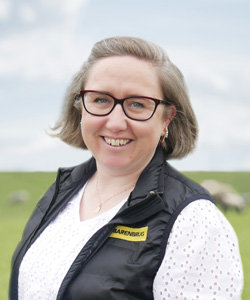
Janet joined Barenbrug UK in September 2022, as the Agriculture Product Manager. With a broad range of agricultural experience in Canada and New Zealand, Janet also spent 5 years in Technical Development team at Barenbrug New Zealand. Janet lives on a farm in Fife, and enjoys reading, Scottish country dancing, piping, and adventuring around the countryside.
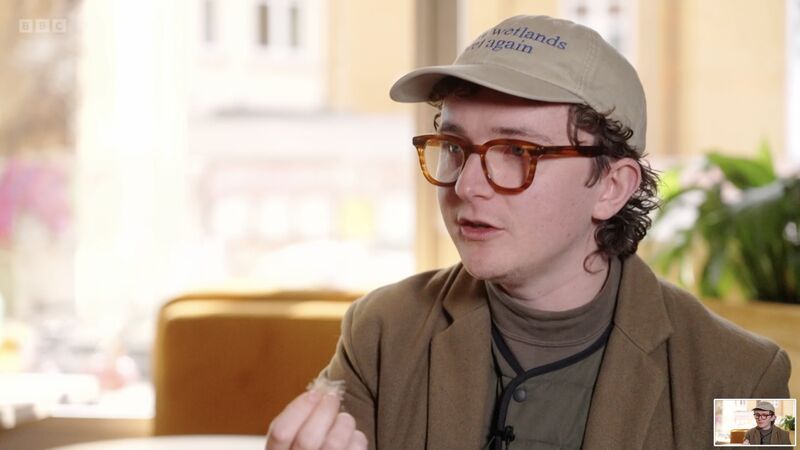
Yara is an Earth Observation Application Scientist at Assimila working on crop yield forecasting using WOFOST with a focus on incorporating Nitrogen inputs for a better nitrogen use efficiency. She also works on peatland and vegetation monitoring through Earth observation data. Yara holds a BSc in Agricultural Sciences from the American University of Beirut (AUB) and an MSc in Remote Sensing from University College London (UCL), where she researched potato crop modelling in the Netherlands with IrriWatch.

Rosaria is a Co-founder, Director, CEO at PfBIO. She has a PhD in Molecular Microbiology, and she is focussing on company leadership and business development.
PfBIO is developing microbial-based solutions to replace chemical pesticides in agriculture and provide a more sustainable alternative. There is a growing demand for these biocontrols and biostimulants as farmers look to lessen their dependence on synthetic products. PfBIO has developed a process to identify the best biocontrols strains for specific crops. Starting with strawberries, it is currently testing its process in field trials and will look to introduce products specifically for onions, hops, lavender, tomatoes and potatoes in the future.

- Research spin-outs – transitioning from lab to field
- Why does agriculture need expertise from other sectors?