
In-Person Agri-TechE event: Farming For the Future – Novel Crops and Fresh Thinking
From under-used legumes and brassicas to durum wheat, diploid potatoes, seagrass and sunflowers, and a bit of amaranth and teff, possibly coming soon to a field near you.
Although there are nearly 400,000 known species of flowering plants, only about 7,000 have been cultivated for food, forage, fibre or fuels, and just 30 underpinning the world’s food supply. 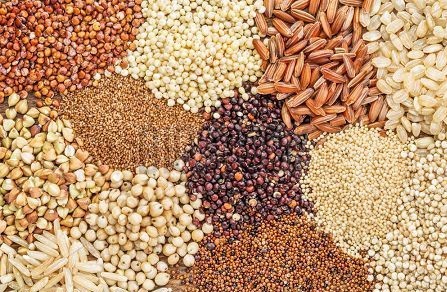
In the UK, 75% of arable-farmed land grows just three crops: wheat, barley and oilseed rape. Putting pressure on soils and inviting selective pressures for disease and pests, both human diets – as well as fields and farms - need a greater diversity of production to increase overall resilience.
Join us to hear a keynote address from Dr Lydia Smith, Head of the NIAB Innovation Farm, who has recently co-authored research on behalf of Defra. She has analysed the potential of a range of crop plants for horticulture and broad field cultivation, ranking them across a number of criteria including market potential.
Support for a greater understanding of novel crops within the arable rotation has gained £1M investment from UKRI and ten exploratory projects receiving Seeding Awards are to showcase their initial findings.These projects have been carried out at UK Universities and research institutes. You will be hearing how they have been investigating the potential for novel crops in the rotation. During the networking you will get a chance to connect with industry, farming, policy and academic experts.
What will I learn?
You’ll hear about new crops that have potential for growth in the UK, such as novel legume crops and under-utilised brassicas and novel protein crops as well as species which improve soils and provide improved grazing for livestock.
Some of the Chenopod crops – flowering plants from the goosefoot family include quinoa (as well as beetroot spinach and chard) are increasing in potential for the gluten-free grain market as well as being potential alternatives to leafy greens. Novel winter cereals and diploid potatoes bring new options to existing crops which farmers are familiar with growing.
Who should attend?
-
Farmers, agronomists and land-owners looking to expand their arable rotation and explore new markets
-
Researchers interested in the kind of new knowledge which will need to be generated to harness the potential of some of these crops
-
Technology developers keen to understand any new machinery or management needs to grow different crops in different ways
-
Agricultural business consultants and advisors wanting to ensure they have the latest insights into possible new cropping options
-
Policy-makers needing to understand the contribution made to the industry and environment by novel crops and how to incentivise their implementation.

The event is free for members of Agri-TechE and for non-members.
Basis CPD points will be available to attendees of this event.
The event is orginised in partnership with BBSRC UKRI.
Read related stories:

Mailing List:
If you would like to hear about what Agri-TechE is up to, or about other events we run for both members/non-members of Agri-TechE please sign up for our newsletter. We send about 2 emails a month, and you can unsubscribe at any time.
Agenda
10:30 - 10:40 Welcome words from Agri-TechE and BBSRC
- Lydia Smith, Head of NIAB Innovation Farm - Are some crops “Under Utilised” for good reason – can we spot the low hanging fruit?
- Andrew Francis, COO and Co-Founder at TEAM AG UK
Seeding Award academic winners will give a series of talks about their research findings and potential for alternative novel crops
Networking activity: opportunity to dive deeper into research findings, ask your questions to academics and explore potential market opportunities for these novel crops