Can the UK remain an agricultural innovation leader? Bayer’s Mark Buckingham explains
 Agri-TechE
 As the UK considers closer alignment with European agricultural regulations, what could it mean for innovation, trade and farm productivity?
Agri-TechE’s Director, Belinda Clarke, speaks with Bayer UK & Ireland’s Head of Public Affairs, Mark Buckingham, about the opportunities, risks and challenges facing UK agriculture as policymakers consider closer alignment with European sanitary and phytosanitary (SPS) regulations.
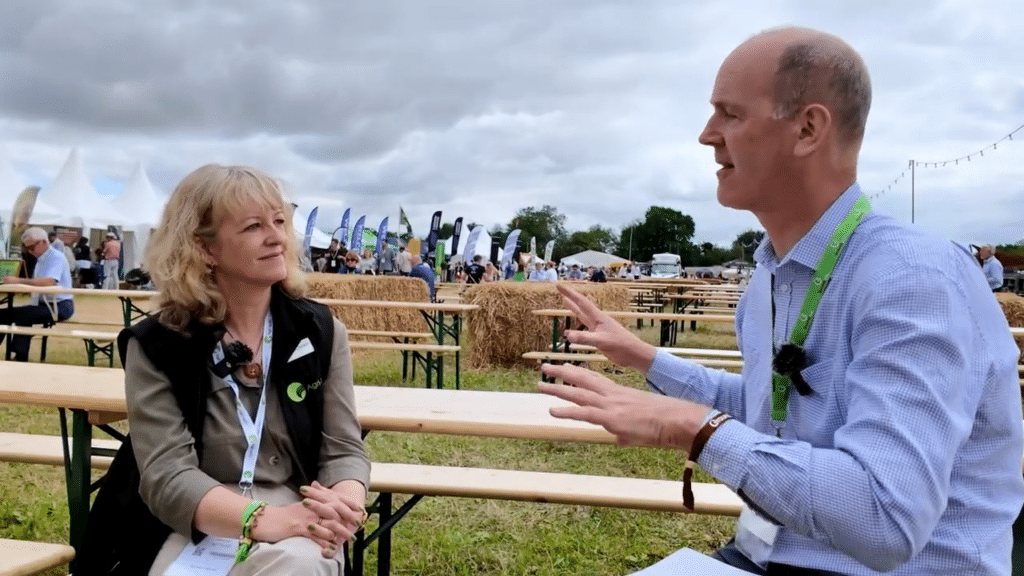
What could closer UK-EU agricultural alignment mean for British farmers, agricultural innovation and the future competitiveness of the UK’s farming sector?
The discussion examines the potential benefits of reducing trade friction between the UK and EU, including easier movement of agricultural goods and inputs across borders. However, Mark also highlights concerns that increased regulatory alignment could reduce the flexibility that has enabled the UK to develop its own approach to agricultural innovation following Brexit.
A key theme is the UK’s ambition to become a leader in agricultural innovation. Mark discusses examples where the UK has moved ahead in areas such as precision breeding legislation and crop protection approvals, creating opportunities for farmers to access new technologies more quickly. He considers whether these advantages could be maintained under a more aligned regulatory framework and what this could mean for future investment and innovation.
The conversation also explores the growing interest in regenerative agriculture, including changing approaches to crop production, soil health and sustainable farming systems. Mark explains how companies such as Bayer are adapting their research and development activities to support evolving farmer and market requirements through advances in plant breeding, biological products and crop protection technologies.
Another important topic is the future role of glyphosate, one of the most widely used herbicides in global agriculture. Mark discusses its importance within modern farming systems, its relevance to regenerative agriculture practices such as reduced tillage, and the regulatory outlook for its continued use in Great Britain.
Looking ahead, the interview considers the UK’s long-term vision for agriculture and the policy decisions that will shape the sector’s future. From trade and regulation to innovation, sustainability and food production, the discussion offers insight into how agricultural businesses are assessing both the opportunities and uncertainties facing British farming over the coming decades.
Watch the full discussion here:
Post Overview
Agri-TechE Related Posts
Implications of the Super El Niño for UK wheat farmers for the 2026/27 season
Smarter, not harder: BactoTech is crossing the biological crop fertilisation Rubicon
Plant, microbial and algal biotechnology for a clean energy future

Woodsmith Mine to benefit from investment agreement with Mitsubishi

When the going gets tough are farmers getting biological? Five Take-Aways from the McKinsey report