Future-ready agriculture: embracing bio-stimulants
 Verdesian Europe & Africa
As part of our “Back to the Future” project, we’re asking Agri-TechE members to reflect on how the agri-tech industry has evolved over the past decade and to share their vision for the next ten years. By compiling these insights, we aim to create a powerful outlook on the future of agriculture, a compelling call to arms for the industry driven by the diverse perspectives of our community.
This submission is part of the collection of reflections and predictions from our members, offering unique perspectives on the industry’s past milestones and future directions. Each contribution adds to a broader dialogue about the innovations and challenges that will shape the next decade in agri-tech.

The future of growing
Why should it matter
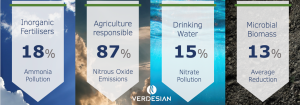
To solve our climate challenge and protect nature over the coming 10 years and beyond we must embrace, transform and accelerate innovation in agriculture. As one of the largest greenhouse gas emitting sectors of the global economy, efforts to embrace bio-stimulant technology and solutions in our global food systems need to be at the heart of change.
How can we make a difference
To reach these goals, industry’s R&D programs must close the technology gap in agriculture, with new technologies and methods of producing food which protect nature.
The bio stimulants industry today has technology and solutions that can deliver improved quality, yield and return on investment for growers around the world. However, is it fully ready to meet the challenges of the next 10 years?
Embracing bio-stimulants
If we are to meet the challenges of Climate Change by reducing the impact of abiotic stress on crops plus reduce greenhouse gas emissions over the next 10 years, then the bio stimulant industry must work more cohesively to move their technologies in that direction.
Alongside this change, the grower’s mindset also needs to embrace advancements in bio stimulant technology, as an essential part of their crop program. In Europe today only 38% of growers embrace bio stimulant technology.
Overcoming abiotic stress
New bio stimulant technologies for the future will deliver the reductions in abiotic stress and assist in reducing environmental impact.
However, as a trade-off growers may have to accept that bio stimulants alone may not be able to continue to deliver increases in crop yield but will deliver improved crop resilience and quality delivered through enhanced abiotic resistance to drought, flood, cold and heat.
Yield enhancements will come more from the domain of plant breeding and genetics.
Here is an example of resilience to extreme heat stress, leading to an increase in marketable crop using a foliar bio stimulant called Crop+ from Verdesian Life Sciences.
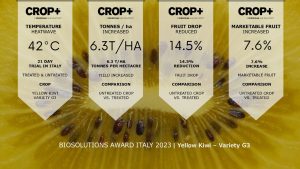
The example above is an extract from a bio stimulants presentation about demand, growth and challenges.
Agricultural challenges
At present some 30% of bio-stimulants used globally contain amino acids and microbials. Amino acid sources are marine, animal and vegetables.
Importantly, amino acids and microbials can modulate gene expression and induce metabolic changes in treated crops.
The complex carbohydrate compounds found in these technologies are the possible future for delivering the changes growers need.
However, the bio stimulant industry needs to overcome certain obstacles which currently exist in the supply chain around the sources of amino acids, particularly from the animal and marine sector and amongst industry regulators in assessment and expansion of microbials within agriculture.
Lobbying on behalf of the industry is being conducted today primarily by members of the European Bio stimulant Industry Council (EBIC).
Closing the gap
The food retail sector of the supply chain is also the key to overcoming this sustainable farming obstacle as they are the gateway and controller to the consumer.
This gives them the power to influence the grower in a sustainability and environmental direction.
To help close the current technology gap and deliver the technology needed in the coming 10 years, the bio stimulant industry needs to create more awareness and educate the food retailers.
It is important that retailers align their policies to the growers, encouraging them to embrace bio stimulant technologies of the future. Industry platforms like Agri-TechE could play an important role in this regard.

Grower adoption
The bio stimulant industry will play its part in the coming decade alongside regulators and the food industry, but the question remains; ‘will growers fully embrace the technology advancement needed in the coming 10 years to reduce effects of climate change and environmental impact?’
Only if collectively, we can clearly demonstrate that the additional cost of adding these technologies to grower’s crop programs will provide a clear return on investment and will not be seen as a climate change tax.
That is the challenge for the industry in the coming decade.
Related Posts

Navigating Fertiliser Risk over Reacting to Headlines

Connect, Co-Develop, Co-Exist: the REAP Report 2025 is launched
Earlham Institute and Natural History Museum launch deep tech startup Agnos Biosciences™
Fertiliser Supply Update: Why Planning Ahead Matters More Than Ever

Farming Update – October