Lessons from the sea – Timac Agro, improving plant and animal resilience
 Agri-TechE
What do seaweed, lichen and moss have in common? The answer: these plants are adapted to withstand stress and to thrive. Understanding how they achieve this resilience is one strand of research at Timac Agro. The company has one of the largest privately funded agricultural research facilities in Europe and leverages this to provide innovation for the industry.
David Newton, Technical Product Manager at Timac Agro UK, says that the family run company – which was established in Saint-Malo, Brittany in 1959 by Daniel Roullier – was one of the first to see the potential of using marine calcium as a soil conditioner.
From sea to soil health
David explains: “Traditionally, Calcified seaweed is used to provide lime on agricultural land, and Roullier found a way to grind a deposit of marine calcium into a powder, called Calcimer™, to enable it to be more widely used.
“Soil pH is key to the availability of nutrients, especially phosphorus which is locked up at both high (alkaline) and low (acidic) pH. Calcimer acts a pH buffer, regulating the acidity of the soil and increasing the bioavailability of nutrients.”
These nutrients include sulphur, magnesium, boron, zinc and manganese, all of which help the crop grow, but also trace elements such as iodine, cobalt and selenium, which are crucial to livestock health. In this way soil conditioners can increase the palatability and nutritional density of forage crop.
The company has grown organically, with over 439 subsidiaries, including the UK office, which is located within the agricultural research facility at Rothamsted.
Biostimulants are at the core of the company, which focuses on soil conditioners, plant nutrition and animal nutrition, and is always looking to provide multiple benefits from its products.
For example, new legislation came into effect in 2023 aimed at reducing ammonia emissions from unprotected urea fertilisers. This had been expected and while many in the industry have been focussed on developing a urease inhibitor, Timac Agro is developing a protection solution that not only protects Urea – reducing losses by 40-48% – but also provides a soil microbial stimulant.
Evidence for efficacy
A lack of regulation in the UK market has created some scepticism over the performance of biostimulants. This is set to change in early 2027, when new legislation is to be introduced to provide evidence of efficacy.
As Timac Agro already operates in markets where there is strict regulation, all of its products go through a rigorous testing process, similar to the UK pesticide procedure, to validate their claims.
David explains that its protected nitrogen fertilisers are a good example of this. Its phased-released nitrogen uses an organo-calcic complex to create a protective lattice around the nitrogen, binding it into the soil. Under the influence of temperature and moisture, this complex releases nitrogen at a plant-friendly rate.
The N-PROCESS molecule also releases a suite of trace elements and micronutrients which become available to the plant and increase the nutritional quality of the crop.
He says: “Research has found that the N-process molecule increases expression of a gene that makes an enzyme involved in the protein production. In effect the plant is utilising the nitrogen more efficiently so you can apply a lower rate of nitrogen without affecting performance.”
This benefit has been further evidenced with the use of root growth chambers, which can make the improved root architecture visible under a growing crop.
David is keen to distinguish biostimulants from products aimed at controlling a specific disease. In a recent trial on radish growth with Gs, it was found that improving the crop health and viability with a biostimulant also resulted in a reduction in crop damage from Black Spot. However, this was a result of greater health and vigour in the plant rather than reducing the incidence of the disease.
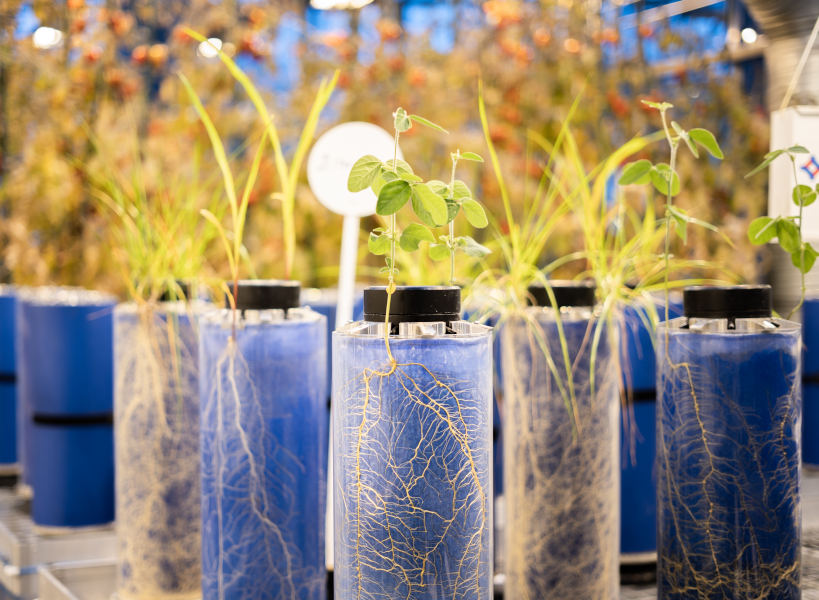

Left: Rhizotubes research by Timac Agro; Right: the CMI building in Saint-Malo, Brittany.
Both images courtesy of and credit to Timac Agro / CMI
Boosting beneficial microbial activity
Conditioners also boost the population of beneficial organisms in the soil, and Timac follows this approach rather than introducing microbes.
“One exception is nitrogen fixing microbes, where there can be a case for inoculation in certain conditions to enable the crop to get away faster,” David continues.
“Soil conditioning a multifaceted approach. Improving the structure means there is better oxygen flow and soils will drain better, but at the same time retain moisture in drought conditions. This also creates a more beneficial environment for the microbiome.”
2024 had a particularly wet start and David says that for several years the company has been experimenting with a starter technology, either rooting enhancement or germination enhancement or a combination of the two, to improve the conditions for microbial populations within the soils.
“The aim is to get that increased efficiency of nutrient use and the crops get away faster,” David explains.
Exciting near term and blue-sky research programmes
David continues: “Research is at the heart of what we do. We are currently reviewing the offering that we have as a group, and there are a couple of very interesting developments in the pipeline.
“Increasing shelf life is a particular focus, as an extra day of shelf life gives a huge amount of value and a reduction in waste for producers, supermarkets and end users alike.
“There is also a new generation of soil conditioners coming through that are looking at controlling the redox reaction to enhance the micro-electrical impulses throughout the soil. This has potential to improve bacterial and fungal interactions with plants, enabling further increase in the efficiency of nutrient availability and uptake.
“We’ve got a lot of development work going on in the animal health side of things looking at utilising essential oils and plant extracts to increase parasite resistance, both internal and external.
“Another major focus is reducing methane production within ruminants, and we should be making a big newsworthy announcement on this shortly.
“Looking further to the future, at Saint-Malo we have seaweed growing in one of the greatest tidal ranges in the world. It is saltwater half the time, darkness half the time, it dries out twice a day, and yet it’s one of the fastest growing plant type organisms.
“Being able to capture the natural products that confer this resilience has potential to provide a game-changing breakthrough for crop plants.”
Post Overview
Agri-TechE Related Posts
Say hi to BACTOTECH UK’s Microbes! A practical guide
Plant, microbial and algal biotechnology for a clean energy future
New BioTransitions global scale-up programme launched at Norwich Research Park for agri-food biotech businesses
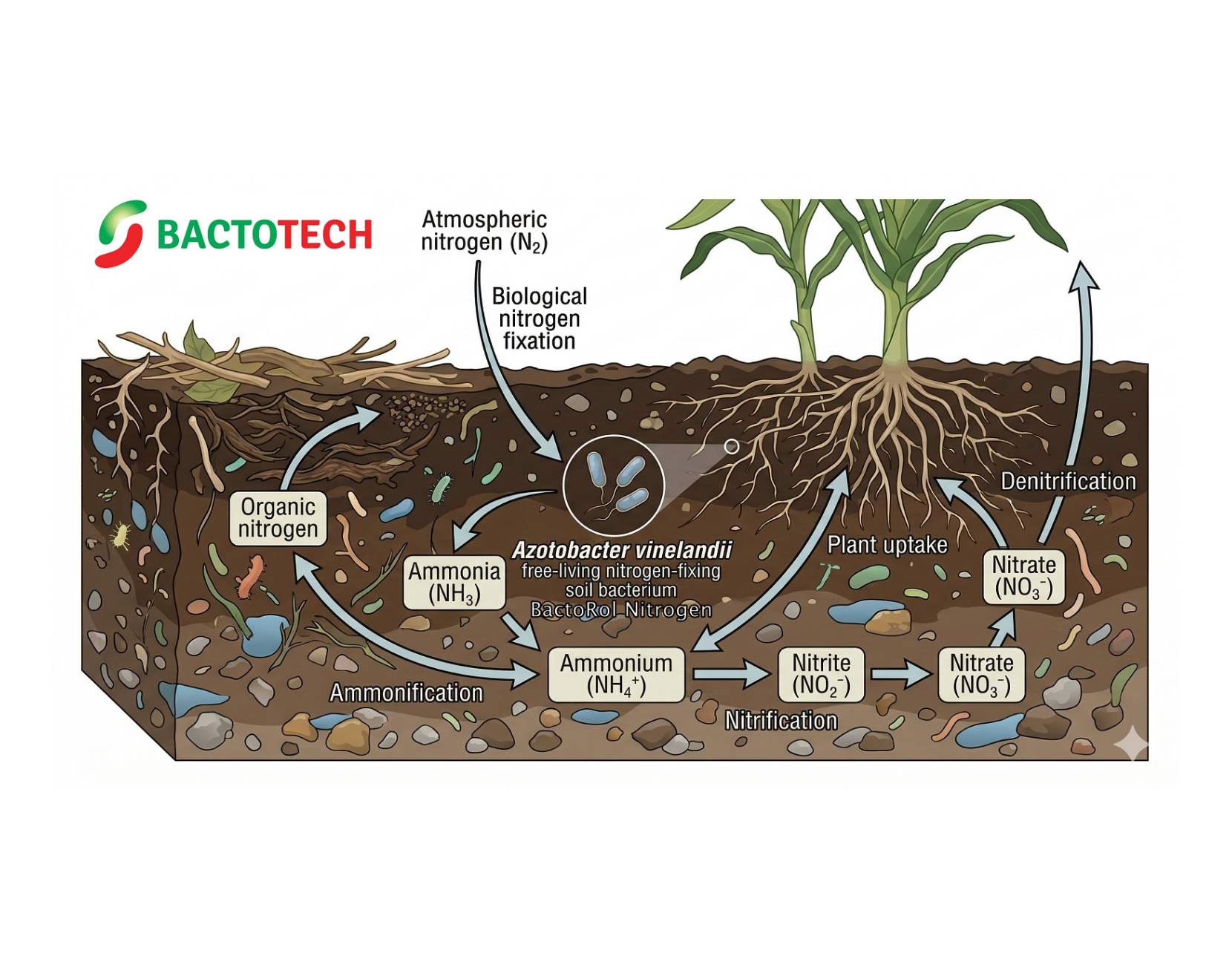
Azotobacter vinelandii: a practical look at free-living nitrogen-fixing biology in crop production

A trip to the Tees Valley HQ