Is per plant robotic weeding the answer to blackgrass?
 Agri-TechE
The world’s first ‘per plant weeding’ service has been demonstrated by the Small Robot Company (SRC), its first customer is the Lockerley Estate, where robots are a key part of a regenerative farming strategy.
The service uses two robots, Tom a scanning robot and weeding prototype and ‘Dick’ that zaps individual weeds with electrical ‘lightning strikes’, using no chemicals. On-farm pilots of the service will commence this autumn.
In future, Tom will also gather data from multiple sources, such as sensors and microphones for birdsong and pollinators, to assess soil health and biodiversity.
The ‘Dick’ robot prototype deploys RootWave non-chemical weeding technology mounted on an igus delta robotic arm to zap the weeds.
“To prove the power of per plant farming we are focusing on answering the biggest problem that farmers face at the moment which is weeding,” said Ben Scott-Robinson, CEO and co-founder, Small Robot Company.
“We’ve now proved we can deliver per plant weeding: a world first. The focus for us now is being able to move forward to deliver this, repeatedly, and at scale. This will be game-changing.”
Black grass costing a fortune
“Weeds, especially black grass, are crippling. It’s costing the industry a fortune,” commented Craig Livingstone, Lockerley Estate farm manager and National Food Strategy advisory panel. “Resistance to herbicides is the number one problem. The robot offers us a real chance to stop using artificial inputs, which goes towards our regenerative model of farming.”
Rob Macklin, the National Trust’s Head of Farming and Soils, agreed: “Technology needs to play a big part in solving many of the issues we currently face in farming – particularly improving soil health and carbon sequestration, reducing our reliance on fossil fuel power and fertilisers and avoiding the adverse impacts of synthetic chemicals on the environment. We have started small robot trials at Wimpole and intend to extend trials to other estates in the near future.

Tom is now delivered to commercial specification, ready for ramp up of the service to more than 100 farms in 2023.
Other benefits from the mapping service include yield predictions, measurement of herbicide efficacy, and giving farmers the ability to take “no spray” decisions with confidence. The first crop for the service is wheat. SRC is now working on being able to recognise different weed species, with the next phase being multiple crop types. It has also just started a project to be able to detect disease in wheat.
Tom will cover 20 hectares per day autonomously, collecting about 6 terabytes of data in an 8 hour shift, and detecting millions of data points per field. As an example, Tom collected 12.7 million plants in a single 6 hectare field, of which 250,000 were identified as weeds.
He can distinguish plant details at submillimetre resolution, with less than one millimetre per pixel resolution on the ground. He is robust and weather-proof and can be used all year round. The next generation Tom also incorporates increased speed, 5K camera capacity and extended battery life.
Small Robot Company
Post Overview
Agri-TechE Related Posts

Stable raises $60m to help farmers manage risk at a time of turmoil
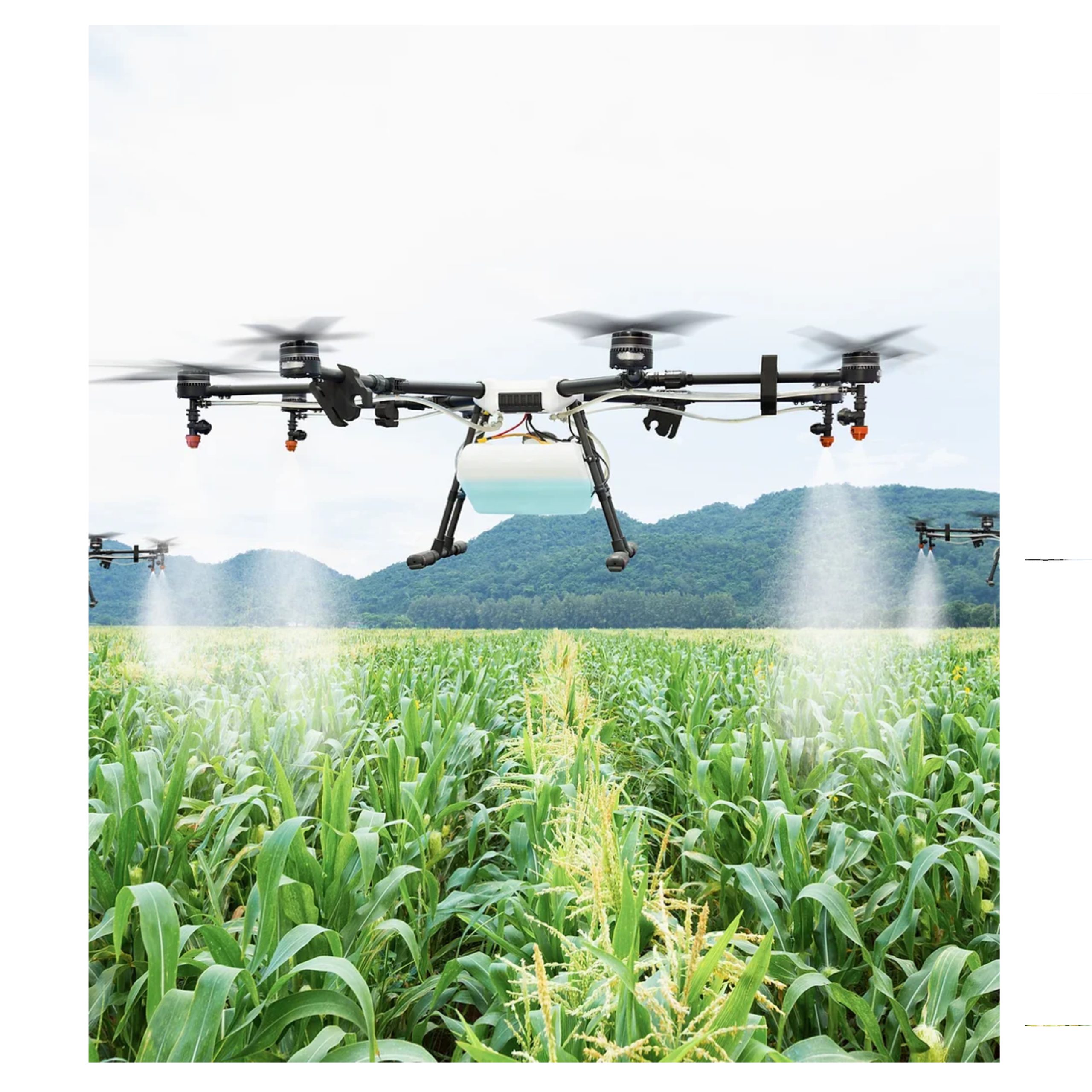
SEAD Artists Webinar: Drone Repeat – Introduction to the use of drones within Paludiculture

Cambridge-based business presented with award for its generative AI-based knowledge platform
Emerging Agri-Tech: from Research to Practice

Burleigh Dodds Science Publishing launch new generative AI-based knowledge platform for the agricultural industry