Is the future a carbon neutral basket of shopping? Asks Chris Brown at ASDA
 Agri-TechE
 Chris is on the Agri-TechE Stakeholder committee and recently briefed delegates at a workshop for its members designed to create new thinking about the opportunities created by Net Zero for innovation.
“We’ve been talking about greenhouse gas emissions and I’ve been running GHG measurement on-farm for 15 years, but now its feels like there’s real momentum behind the conversation in terms of supply chains. For example, the EU has a proposal for a carbon tax for imports. So, there’s a clear focus from many directions.
“The ambition to eliminate carbon is great, and businesses are increasingly being asked to account for it. My own business is now under the streamlined energy and carbon reporting so for the first time our Scopes 1 and 2* are to be included in our financial reports.
“If you want a clear example of how important carbon is, we’ve been reporting carbon for the past three or four years but this is the first year I have had several accountants to actually audit what I’m presenting. It’s a big step on.”
Roadmap for moving towards Net Zero
Chris explains that interest in Scope 3, which looks at carbon emissions in a business supply chain, has “suddenly shot up”:
“The supply chain also extends to our customers – the consumers – and they tell us very clearly that they expect us to help them reduce their waste. There is much investigation to understand what this could look like going forward.
“We’re part of the British Retail Consortium roadmap to be Net Zero by 2040, and that includes our agri supply chain. Agricultural and sourcing needs to respect and restore – so we’re doing a lot of work around natural capital and biodiversity, which also has to be taken into account.
“We will also have an ambition about being more regenerative – but first we need to have an understanding of what that means in practice and how to define it.
“I don’t personally see a future in which we’ll try to index the carbon account, because you end up having to work up how much evil you’re going to balance with good – a better alternative is to be more transparent about, for example, GHG emissions by product.
Carbon neutral basket of shopping
“I can see us having an ambition to talk about being a ‘carbon neutral basket of spend’ – i.e. products in the shopping basket balance out to carbon neutrality. Understanding what that might mean in terms of choices and the customer experience is complex.
“I recognise that the science isn’t developed and there’s a lot of conversation to be had over how that is calculated and presented. My customers spend 10-20 seconds in front of a shelf to make an informed choice – they’re not going to read a library of information on the back of a pack!
“We have very clear responses from market surveys: the customers expect us to make these choices on their behalf. If we ask, ‘do you want to pay more for a low-carbon product?’ the response we get back is ‘you wouldn’t sell me something that was high-carbon’.
“We need to be able to meet those customer expectations.

“However, I don’t think that will mean labels on products. This was trialled by the Carbon Trust a decade ago and it didn’t deliver as expected. Additionally, it can be difficult to interpret. About seven years ago we had a low carbon egg offer on our shelves, produced by renewable-powered free-ranged egg units – it was clearly marketed as a low carbon egg and sold very well.
“But the brutal reality is, if you wanted a low carbon egg, you’d have gone for a caged egg, because the carbon cost is that much lower than that of a free-range egg.
“My final comment is we need to find a way through communicating and taking our consumers with us which talks about understanding the trade-offs associated with a Net Zero future.
“Regrettably I don’t think there are many compromises in this – and so we’re going to need to face into some very clever innovation to be able to level out the market that we are all aiming to achieve.”
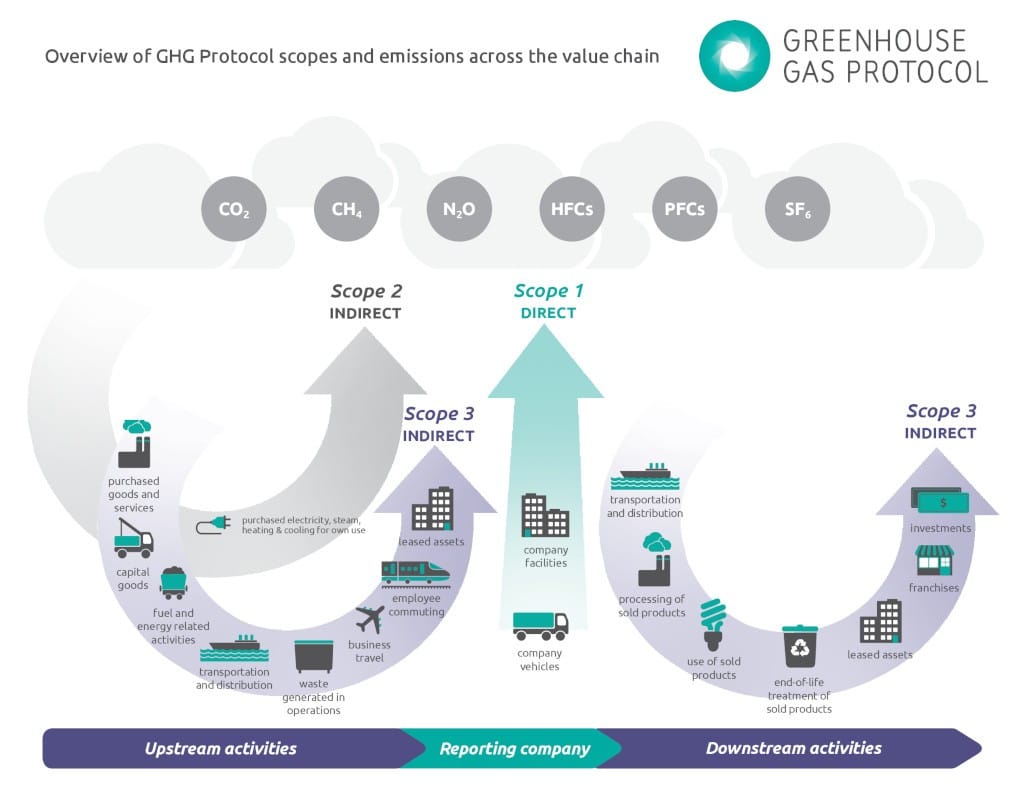
*GHG emissions are categorised into three groups, or ‘Scopes’:
Scope 1 covers direct emissions from owned or controlled sources.
Scope 2 covers indirect emissions from the generation of purchased electricity, steam, heating and cooling consumed by the reporting company.
Scope 3 includes all other indirect emissions that occur in a company’s value chain.
Find out more about GHG scopes at ghgprotocol.org
Post Overview
Agri-TechE Related Posts
Livestock Breeding and Improvement with LIC UK

The Digitised Agronomist with Hutchinsons

Putting Data to Work On-Farm with Elveden Estates
Decarbonising Energy
Advanced electronics will boost farmers’ incomes says speaker at Pollinator