Agri-TechE Week 2020 round-up
 Agri-TechE
 Going virtual enabled an exceptional number of people to participate in REAP and the other Agri-TechE Week events; particularly noticeable is the increasingly national and international reach of the innovation ecosystem.
Although our heart is the east of England, the agri-tech innovation ecosystem is not defined by geography. And this was the thinking behind our name change earlier this year from Agri-TechE to Agri-TechE. At REAP 2020 we certainly welcomed good ideas from Everywhere!
- Exciting companies in the Start-Up Showcase drawn from across Europe
- The Farmer Tech session featured farmers and members based in the UK and USA.
- Delegations from the Netherlands, South Korea and USA introduced companies to the Tech Hub and we announced partnerships to generate mutually beneficial collaborations.
REAP 2020 showed how innovative thinking at all levels is helping to deliver sustainable, productive and profitable agriculture. There was plenty to discuss in the Sofa Session and also later over a digital beer with the farmers.
Below are some of the highlights. Anyone can buy an After Event Pass now to access all of the content, exhibition and networking.
An extra chance to engage in the Agri-TechE Innovation ecosystem has been well received by REAP delegates:
“I think the idea of keeping the conference open for extra days is great – giving people a good opportunity to catch up on what they heard or bits they missed. It is a difficult task to build energy and enthusiasm in an online event. I think your speakers came across well – enthusiastic, but real!”
See more information about the After Event Pass. A number of international initiatives were announced at REAP:
- New partnership with the Western Growers Association
- Next stage in the relationship with Missouri agri-tech ecosystem
- Launchpad in South Korea with Chonnam National University
- A new mission with the British Embassy Warsaw
- Oost Netherlands joins Agri-TechE as members
Read more. This year’s Start-Up Showcase, sponsored by Rothamsted Enterprises, offered new solutions to agri-food challenges, with presentations by exciting early-stage agri-tech companies:
- Antobot -Technology that enables greater functionality in compact agri-robots
- BeeSecure – Improving bee health by translating vibrations to provide early alerts
- Mantle Labs – Offering an unclouded vision of global agri coverage and risk
- PheroSyn – Reducing preventative spraying with pheromone midge trap
- The Land App – Collaborative working to establish best use of land assets
- Willand Group – Climate controlled solution for meat production reduces greenhouse gas emissions
- Xampla – Creating edible micro plastics from pea powder
- Earth Rover
Read more Small Robot Company launched Wilma, the brains behind its farmbots, in the REAP Tech Hub (sponsored by the Cambridgeshire Peterborough Combined Authority), and farmer Craig Livingstone shared his journey later in the week – showing how small, compact robotics are now commercially viable. Wilma’s AI enables ‘per plant intelligence’ by using precise information gleaned by Tom, the scouting robot, on the health of the plant. If Wilma identifies the plant as a weed then Dick – the world’s first non-chemical robotic weeder – is dispatched to zap it.
Read more Hosted by ADAS
Selecting the right vegetation index for the crop was shown to be critical when predicting marketable yield, the INNO-VEG project has shown. For vining peas and dense canopies NDRE is best; for onions a good correlation was found with NDVI. The value of automated plant count at different growth stages was shown when it revealed a 40% discrepancy between the number of planted and picked lettuces.
Read more. Hosted by Agri-TechE
Innovations to support regenerative agriculture was one of the recurrent themes of the REAP conference with benefits to soil health and the bottom line. Farmers in discussion with Professor David Montgomery (keynote session sponsored by AHDB) were also interested in the nutritional value it may add to crops and meat. The Farmer Beer was kindly sponsored by Savills.
Read more. Hosted by AHDB
Getting a clear and quantifiable picture of soil heath and measuring the impact of certain crop management and cultivation practices on soils is notoriously difficult. Electrical conductivity is one technique that is showing promise. “It is essentially a measure of how easily an electrical current can flow through soil,” explained Dr Andy Binley, Professor of geophysics at Lancaster University. “Because current flows through fluid, wet soils show higher conductivity than dry soils, so soil conductivity can be used as a proxy for soil moisture, dryness and compaction”.
Read more. Hosted by Norwich Research Park
Lab research into cabbage stem flea beetle has shown a small wasp is capable of reducing infection by 53%. This is one of the findings revealed by John Innes Centre scientists working on alternatives to neonicotinoids. Another project is looking at how aphids suppress the plant’s own immune response, providing new avenues for plant defence against virus transmission.
Read more. Hosted by the RNAA
Traditional agricultural shows have been hit by Covid-19, but where they did go online there were redeeming elements. Peter Nation of the New Zealand National Fieldays Society said going virtual created valuable opportunities to further expand New Zealand’s role on the global agricultural stage. “We had over 90,000 viewers in New Zealand and in more than 75 countries worldwide.”
Read more. Hosted by Niab
Could you perform better and save money? One of the speakers, Professor Adrian Collins of Rothamsted North Wyke described the National Virtual Farm Network that covers 99,000 commercial farms. It is able to benchmark ‘business as usual’ with similar farm operations on a regional and national level and to model ‘alternative farming futures’ that could be achieved with interventions. Farmers are then able to see the potential benefits of measures that would also reduce unintended negative environmental impacts.
Read more. Many of our events attract BASIS points. If you are BASIS registered, you can also collect 2 points (up to a maximum of 8/yr) for receiving our newsletter and all staff in our member organisations can claim 2 points/yr for membership.
You can still claim your BASIS points for events you attended during Agri-TechE Week – a total of 13 points were on offer so make sure to claim now.
To claim your BASIS points for the newsletter, use reference CP/91546/1920/g on the BASIS website.
Post Overview
Agri-TechE Related Posts

Thank you! We received your application.
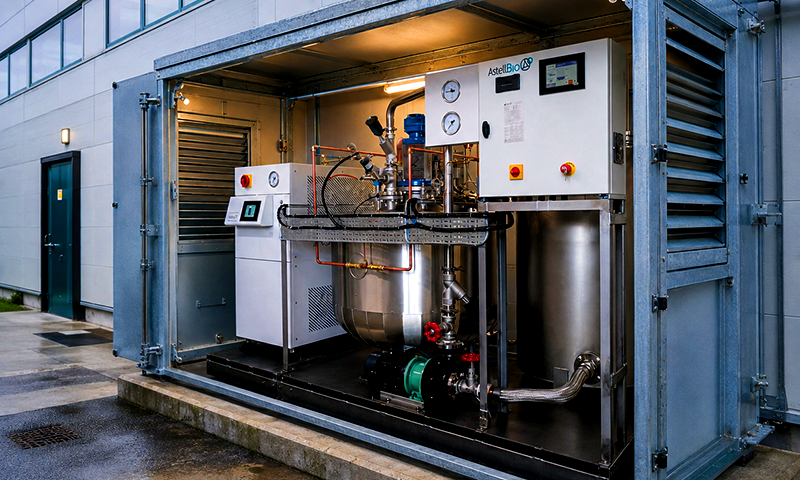
Sterilising the waste before it leaves the building

Apply to Pitch or Demo at the Demo Day, May 2026
Apply to Pitch or Demo at the Demo Day, December 2026

Russ Farn joins eg technology’s Board of Directors