Cranfield University research aims to overcome sprouting challenge
 Agri-TechE
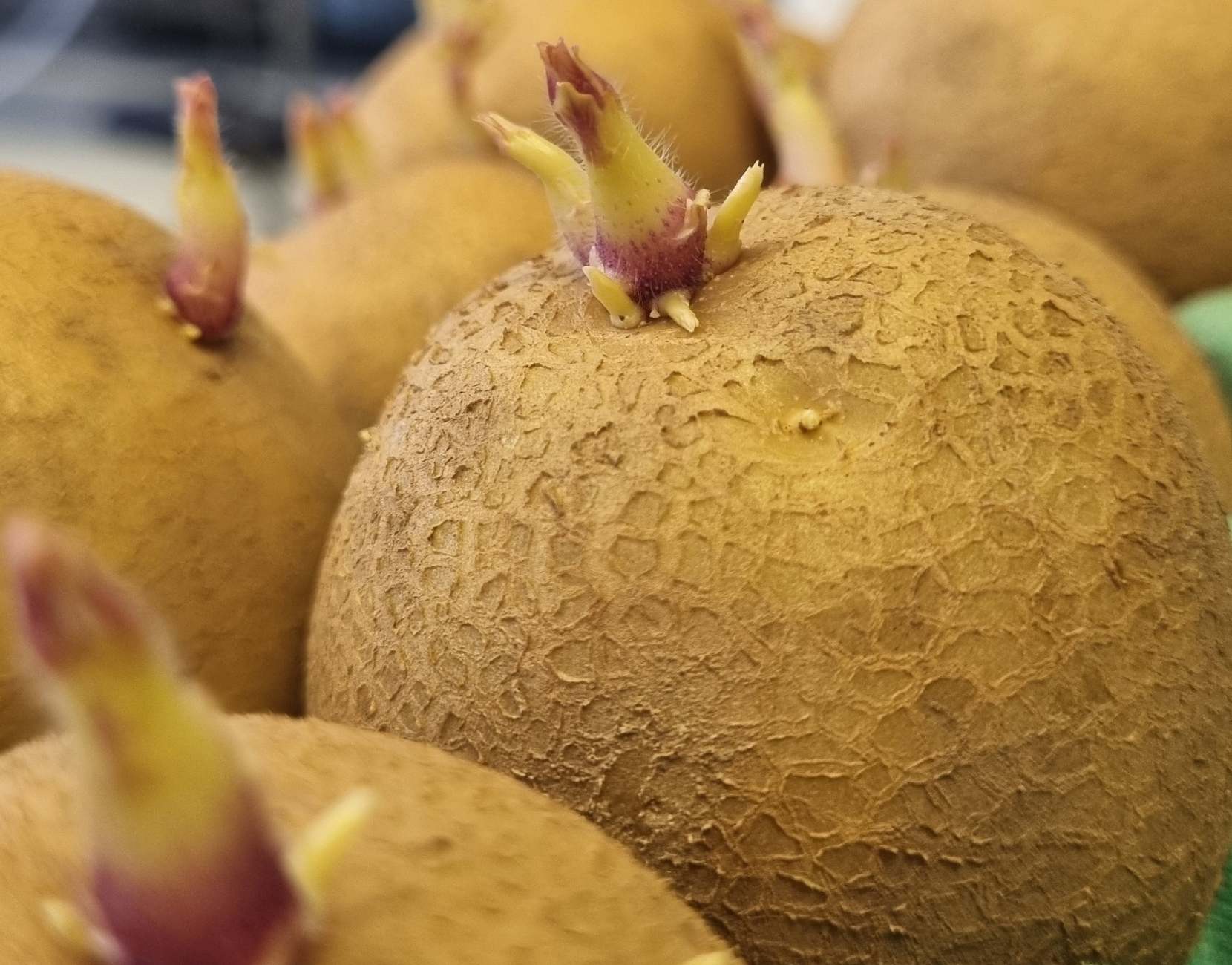
 Finding a breeding solution to the problem of dormancy break in potatoes during long term storage is one of the key objectives of a £3.6m BBSRC-funded Prosperity Partnership project.
Understanding the genetics that control dormancy could enable the breeding of new potato varieties with enhanced dormancy, addressing several challenges, according to Dr MariCarmen Alamar, Senior Lecturer in Postharvest Biology at Cranfield University and academic lead on the project alongside PepsiCo (industry lead) and hybrid potato breeder Solynta.
“It could help us reduce reliance on chemical sprout suppressants, and potentially allow longer storage at relatively higher temperatures, lowering energy costs and improving the carbon footprint of the crop,” she explains.

The genetic basis of potato dormancy
The project is taking two approaches to investigate the genetic basis of dormancy. One uses dedicated breeding populations from Solynta to screen for tubers with contrasting dormancy, which will be used for genetic studies to identify genetic signals that can ultimately lead to the identification of causal genes.
This information will then be used to support marker assisted breeding of varieties with naturally enhanced dormancy, MariCarmen says.
“Because Solynta works with well-characterised diploid germplasm, rather than the more complex tetraploid genetics of the current commercial varieties, it becomes much easier for scientists to study the genetics and biology of traits such as dormancy.”
A second, more targeted approach uses analysis of selected genes known to be involved in tuber initiation and development that could influence tuber dormancy as well.
“We will functionally characterise these candidate genes by silencing or over-expressing them under laboratory conditions to evaluate their role in dormancy.”
The findings could eventually be used to breed new potato varieties with enhanced dormancy, which could be achieved more rapidly using state-of-the- art precision breeding, MariCarmen suggests.
Pre-harvest growing environments
The project also explores how pre-harvest growing environment and management, can influence tuber dormancy.
These methodologies are being supported by the development of a rapid phenotyping model that can act as an early warning system for dormancy break. “We are taking thousands of images of potatoes to train an AI-model that will automatically identify early signs of sprouting using a machine learning approach originally used in medicine.”
From a research perspective, an accurate model would help speed up and increase accuracy of assessing potatoes produced during screening of breeding lines, MariCarmen notes.
In addition to visual detection, the project is also examining whether electrical signals – detected by minute electrodes installed in plants in the field or tubers in store can be used to predict dormancy break by detecting changes in electrophysiological measures.
Pests and soil-borne Pathogens that pose a risk to potatoes
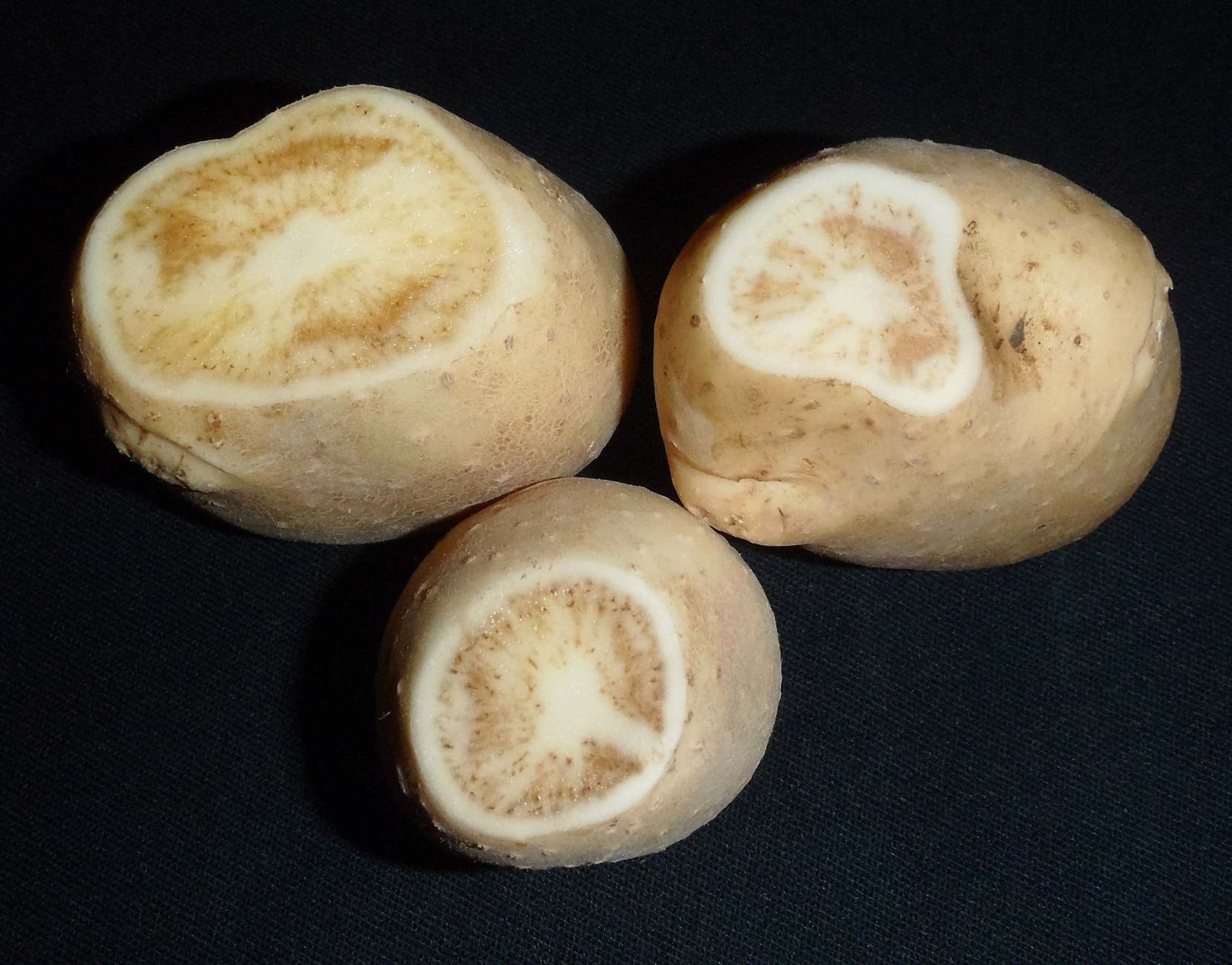
Cranfield University is also one of 18 partners in an EU-funded Horizon project, PataFEST, researching the potential future pests and soil-borne pathogens that might pose a risk to potato production. One such disease is zebra chip, caused by a bacterium, Candidatus Liberibacter solanacearum, which affects potato crops in South America.
Transmitted by plant lice not currently present in Europe, it not only has a big impact on yield but also quality, MariCarmen reports. “The tubers have a discolouration inside that makes them unsuitable for processing.”
Part of the research is looking for potential pre-harvest solutions, such as foliar sprays that would prevent the psyllid from feeding on the plant, development of resistant varieties through breeding programmes and real-time diagnosis tools for early disease detection but MariCarmen’s team is focused on postharvest technologies.
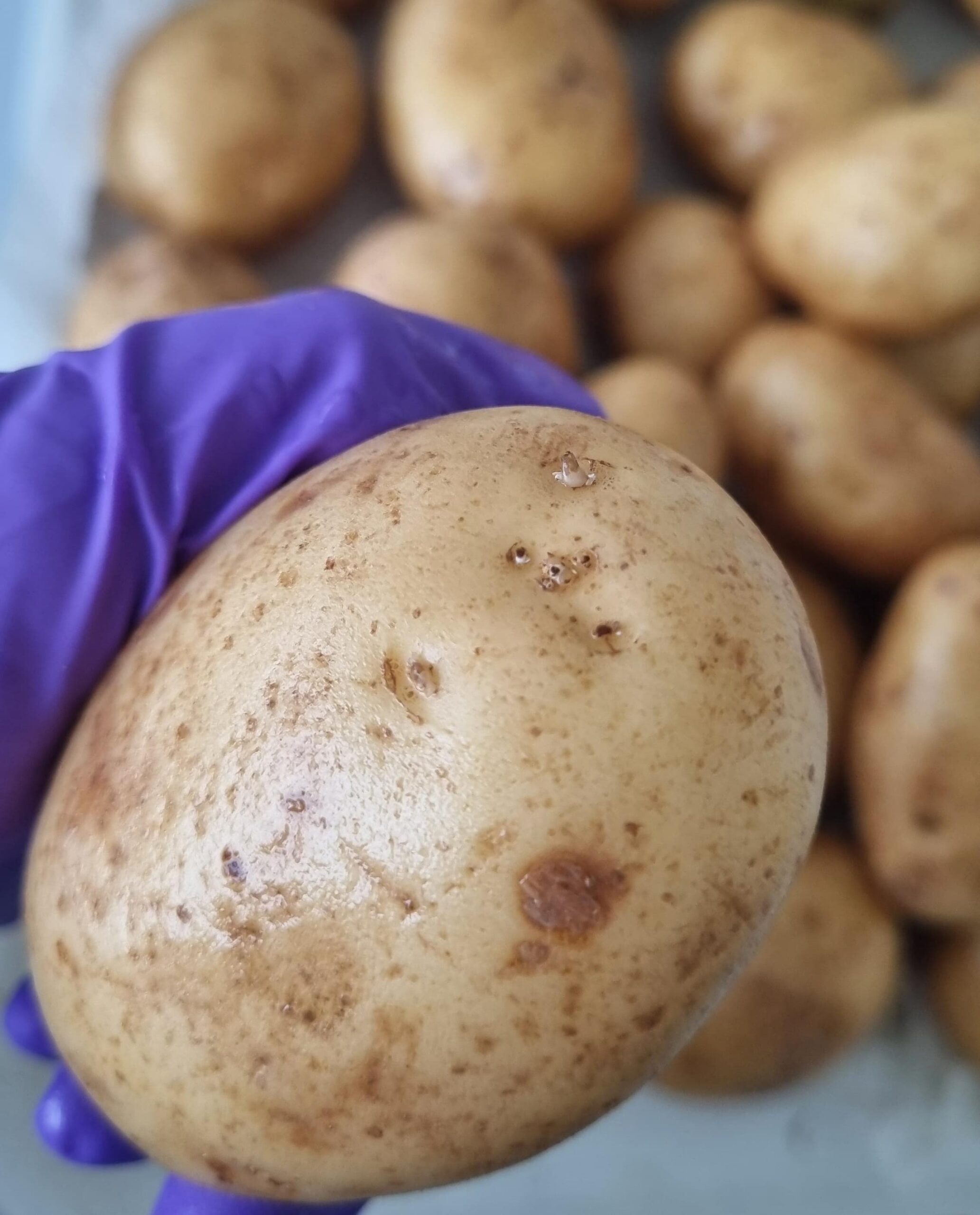
These look at ways of slowing down the progression of some fungal diseases, such as black dot and silver scurf, which get worse the longer the potato is stored. Examples of possible solutions include the use of controlled atmosphere environments in store that contain higher levels of carbon dioxide and lower oxygen concentrations, and edible coatings that the potatoes can be dipped in or sprayed with that reduce disease progression.
“We’re also looking at tools for early detection, not only for zebra chip, but also other diseases like dry rot. We are trying to identify volatile organic compounds released in the very early stages of the disease, which we can then develop sensors for and further install in stores to detect the disease much earlier.”
While this wouldn’t stop the disease, early detection would allow timely and informed management decisions that will help reduce storage losses, she concludes.
Post Overview
Agri-TechE Related Posts
Warm‑weather chickpea dreams are a fantasy without policies that enable production
Ponda Featured on BBC Radio 4’s ‘Farming Today’: Exploring the Future of Paludiculture

Connect, Co-Develop, Co-Exist: the REAP Report 2025 is launched

UK Precision Breeding – Farming Futures Conference
Revolutionising potato breeding through viral gene editing