Harnessing Heavy Rain: Wetlands as Nature’s Carbon Champions
 Ponda
PondaHow excess water can become one of our most powerful climate tools
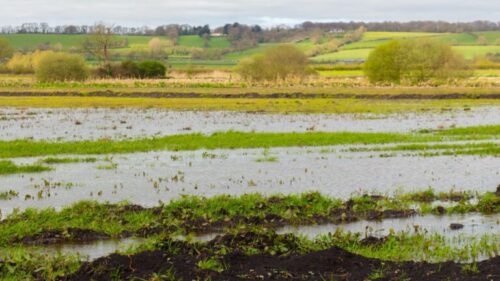
Across many landscapes, heavy rainfall is no longer unusual. Fields flood, planting is delayed, and soil begins to erode. The instinct is to move water on as quickly as possible. But what if that instinct is outdated?
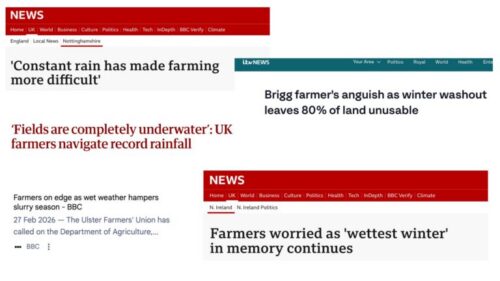
At Ponda, we see a different possibility. In a changing climate, excess rain is not just a disruption, but a really precious resource we can hold in the correct ways. By looking at farming techniques like paludiculture, we unlock one of the most effective ways to store carbon in the landscape.
The Cost of Keeping Land Dry
Modern agriculture has been shaped by drainage and intense drying. Water is treated as a barrier to productivity, something to remove through ditches and pipes, lowering water tables to keep soils workable.
That approach delivers short-term results, but it comes with hidden costs. As soils dry, organic matter breaks down and carbon is released into the atmosphere. Over time, fertility declines and the land becomes harder to sustain. Meanwhile, the water that is pushed off the land does not disappear. It moves downstream, often increasing flood risk elsewhere.
“Over the most recent decade (2015–2024), the UK’s winter half‑year (October to March) has become about 16 % wetter compared with the 1961–1990 average, driven by changes in a warming climate.” – Met Office, 2025
As rainfall intensifies, this traditional system is being pushed to its limits. The effort to stay dry is becoming harder to maintain, and less effective.
Wet soil tells a different story. When land remains saturated, decomposition slows and carbon stays locked in the ground. This is how peatlands and wetlands build some of the most important carbon stores on Earth.
Holding water in the landscape is not just about managing floods. It is a direct way to protect and rebuild soil carbon while stabilising the land itself.
As Natural England (2025) highlights:
“Nature-based solutions create and interconnect habitats for wildlife and improve soil structure and quality by reducing uncontrolled flooding, run-off and loss of topsoil. This approach can turn less-productive farmland into vibrant wetlands that not only absorb excess water and carbon but also support biodiversity.”
A Different Way to Farm
For many farmers, productivity has traditionally meant only growing grains, vegetables, or livestock. But climate pressures are changing what “productive” really looks like. In some regions, heavy rainfall is the challenge; in others, particularly in eastern England, water scarcity is a constant struggle.
At Ponda, we partner with farmers to re-wet dried land, allowing us to source Typha for our bio-based insulation, BioPuff. Reeds can also be harvested for construction and bioenergy, sphagnum moss for horticultural markets. Even in drier areas, re-wetting degraded peat or capturing rainfall when it occurs creates new opportunities for resilient and profitable farming systems that work with the land and climate rather than against them.
By thinking of land as a multi-purpose asset, farmers can build diverse income streams while also restoring ecosystems, improving soil, and storing carbon. It’s not just about coping with extremes; it’s about using land more creatively to make it productive under a wide range of climate conditions.
Our Agriculture Lead at Ponda, Austin Shepherd explains:
“Growing Typha in a paludiculture or wetter farming system is all about transforming risk into resilience on wetter land. These plants act like sponges, converting waterlogged areas into productive, low-risk zones that protect soils and retain organic matter and carbon on drained areas. They also buffer floods, safeguarding fields better suited to conventional food production. This approach generates feedstock for biobased supply chains like ours, whilst allowing landowners and farms to gain both economic and ecological improvements, working with nature rather than against it.”
The need for this shift is urgent. Farmers face increasing pressures from unpredictable weather, and adapting can feel overwhelming. A recent study by the UK Climate Resilience Programme, published in Climate Risk Management and led by Dr Rebecca Wheeler and Professor Matt Lobley from the University of Exeter’s Centre for Rural Policy Research, highlighted this tension. Dr Wheeler observed:
“Farmers have an array of challenges and uncertainties to cope with, and it is understandable they are focused on the short-term profitability and survival of their business. This seems to be preventing them from adapting to the effects of the climate emergency. It is essential the industry finds ways to build resilience, and that farm businesses are supported in planning and responding to changing weather patterns.”
Paludiculture provides exactly that kind of support. By working with water rather than against it, farmers can protect carbon stores, enhance soil health, and maintain productivity even under increasingly unpredictable rainfall. Crops are carefully selected for wet conditions, from reeds for construction and bioenergy to sphagnum moss for horticulture. Productivity does not vanish, it evolves into something better suited to the environment.
The result is a resilient, climate-smart system. Carbon stays locked in the soil, drainage dependence is reduced, and water moves more slowly across the landscape. At the same time, habitats are restored, biodiversity thrives, and the land becomes more robust against extremes.
For decades, land management has been about control. Now, resilience depends on collaboration with natural systems. Excess rainfall, when managed strategically, transforms from a threat into an asset. It can store carbon, reduce flood risk, and support new forms of agriculture designed for a wetter, more unpredictable future.
At Ponda, we believe wet landscapes are not marginal. They are essential. Learning to work with water is not just adaptation. It is a chance to restore carbon, support biodiversity, and reshape how land creates value for the future.
If you’re looking to turn your land into something that delivers long-term benefits for the planet and wildlife while supporting a cleaner fashion supply chain, get in touch. We’d love to chat and explore how wetlands could work for you.
For any questions about wetland restoration or Typha cultivation, you can reach Austin at:
Email: [email protected]
- *I have permission from the copyright holder to publish this content and images.
Related Posts

Connect, Co-Develop, Co-Exist: the REAP Report 2025 is launched
A Well‑Adapted UK signals a shift in British farming
New hyperspectral satellite imagery crucial for lowering nitrogen use amid rising fertiliser costs
Downforce Becomes Leading Harvest Activator
Costs give impetus for innovation for leaf producer