Chief Scientist of the Environment Agency to open Agri-TechE’s New ‘NatureTech’ Conference
 Agri-TechE
 A new generation of “NatureTech” is emerging – tools that can track water movement through a catchment, verify habitat improvements, and model thousands of landscape scenarios in seconds using AI.
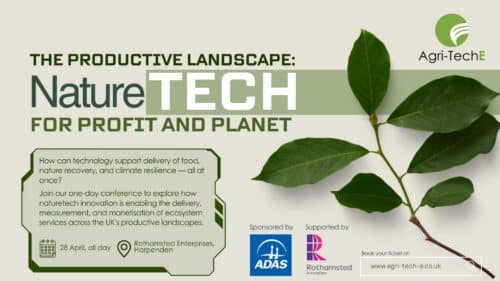
These technologies are reshaping how environmental benefits are measured and valued, and they will be the focus of Agri‑TechE’s upcoming new conference, The Productive Landscape: NatureTech for Profit and Planet, on 28 April at Rothamsted Enterprises.
How can nature recovery be measured in ways that fairly reward the farmers and landowners delivering it? What evidence is needed to demonstrate the environmental value of restored habitats? And how can land managers be recognised for their role in protecting one of the 21st century’s most critical resources – water?
These questions will be explored at the event which brings together innovators, researchers, policymakers, and land managers to examine how emerging NatureTech is enabling the delivery, measurement, and monetisation of ecosystem services across the UK’s productive landscapes.
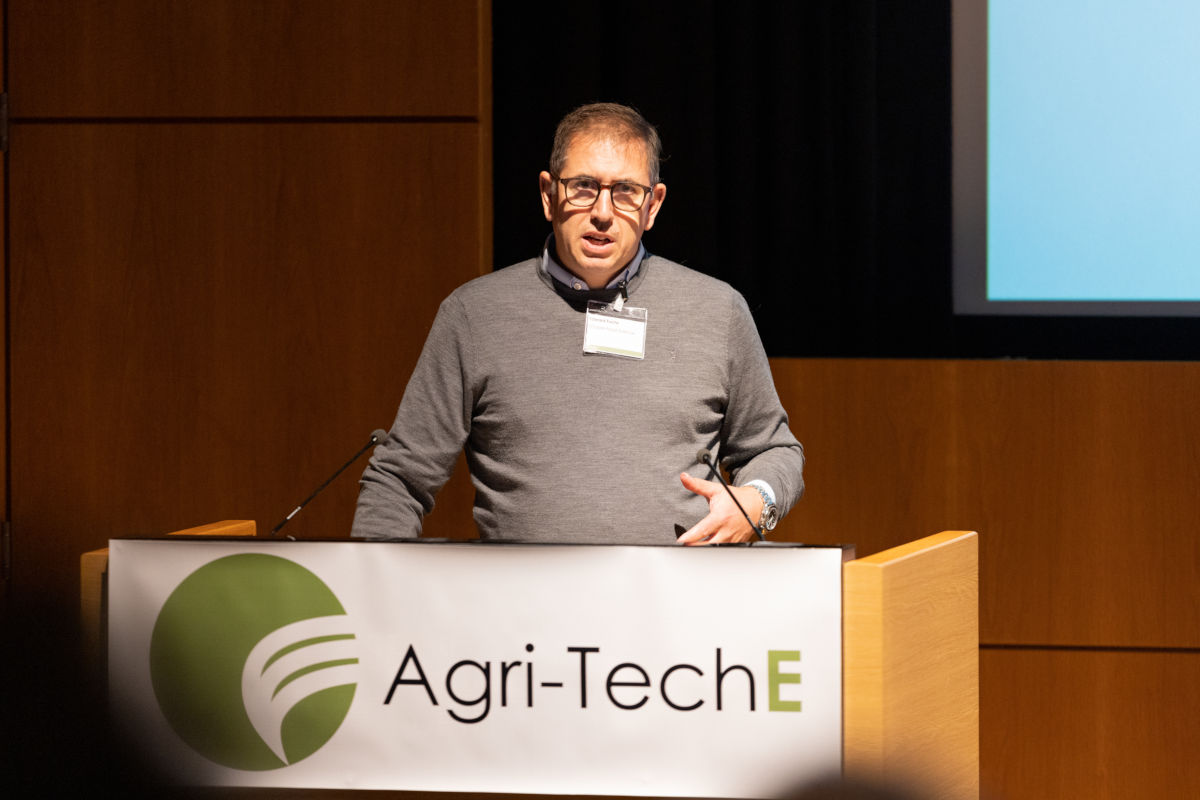
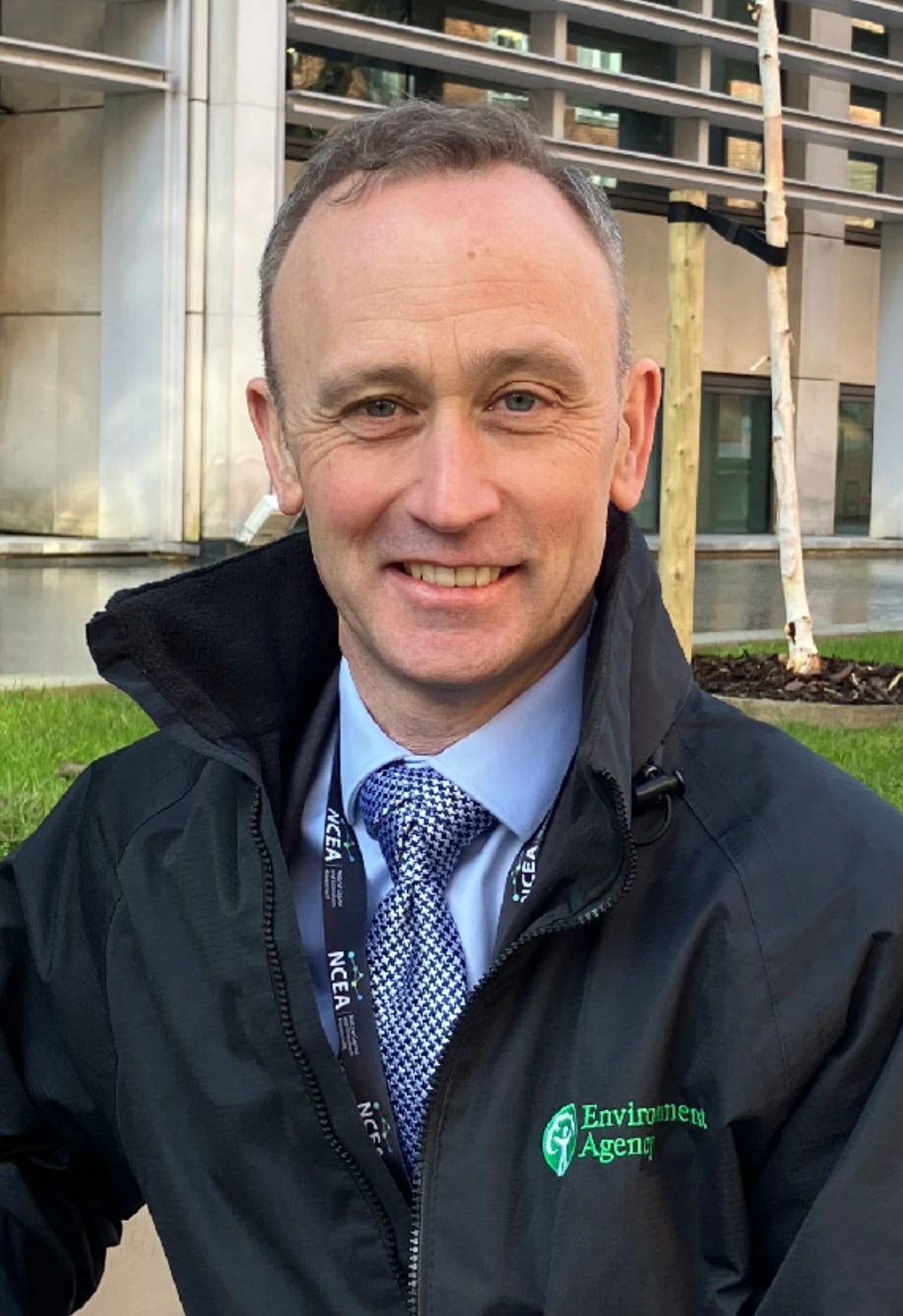
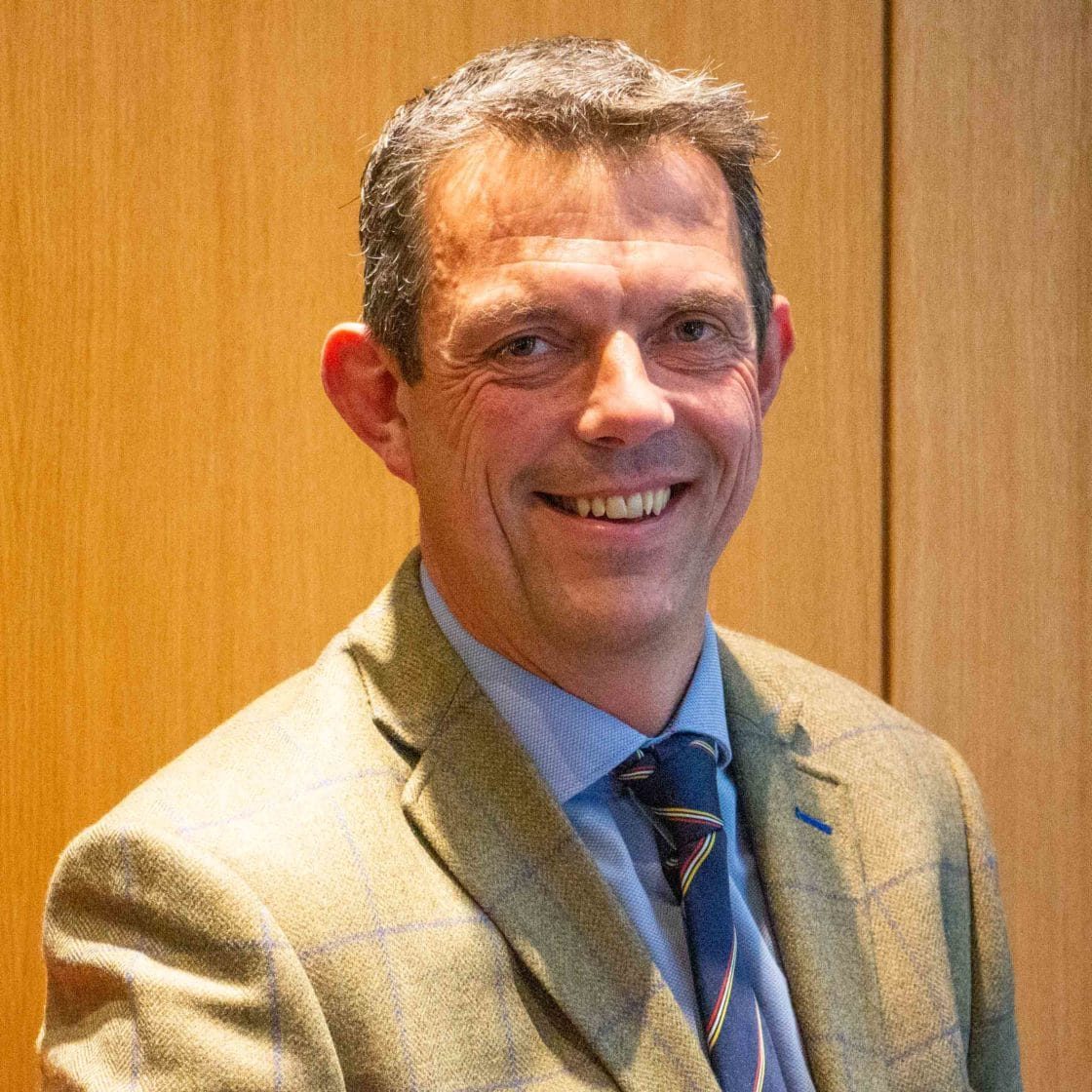
Agri‑TechE is pleased to welcome Dr Robert Bradburne, Chief Scientist at the Environment Agency, as keynote speaker. Ahead of the event, Dr Bradburne shared his thoughts on the opportunities he sees for nature‑based innovation and the technologies that could create diversified income streams for farmers looking to sell environmental benefits.
What is the opportunity for nature technology?
Ecosystem services. I have been developing our understanding of these since 2007, and if you read the recent update to the Government’s Environment Improvement Plan, you can see that these are now firmly embedded in government thinking. We also now have a system for funding farmers that is built around delivering public goods, which can incorporate private finance, giving us a real opportunity to help farmers recognise this potential income source.
If farmers are selling their services growing wheat for millers, can they also sell their services managing water for people in the catchment? Farmers have advisors who tell them how to grow high quality wheat. Do we have enough advisors to tell them how to produce high quality water? Frameworks like the Catchment Sensitive Farming Partnership exist, and we have some good data showing how much impact you can have across a catchment if farmers act on really tailored advice.
Around 70% of our land is farmed, and it’s not just providing the country with food. For example, farmers also own the water filtration system for everyone downstream of them, but at the moment, it can be really hard to give them any credit for it.
Some smart farmer cooperatives are already capitalising on this. They have worked directly with water companies to show they can prevent the need to strip nitrate from water themselves if farmers go the extra mile to stop nutrients from getting into the water in the first place. The Environment Agency doesn’t need to be involved in that transaction, nor does the Government; it can be a private market. But it only works if the farmers can demonstrate that they have done the work that benefits the company paying them. That is where new technology can come in.
Which nature technology developments are you most excited about?
The big thing for unlocking markets for ecosystem services is cheap, reliable information. Some of that will be due to incredible advances in earth observation, including satellites and drones. The development that goes along with this is the ability to extract information from it. New modelling, which might use artificial intelligence, will be able to identify ancient river channels or high erosion sites from earth observations, for example.
The amount of information available to the farmers who want to make this part of their business will grow enormously. That’s really exciting because to get a grip on some of these more complex physical processes, like identifying where water is moving, or denitrification is happening, you do need to think ahead and plan using technology.
If farmers know how to generate positive environmental outcomes and have access to sensors that reliably send data back to demonstrate the services they provide in exchange for the payments they receive, suddenly this becomes mainstream. Once this happens, investment follows, including in a range of other technologies, from precision farming to robotics, and of course, technology-enabled nature-based solutions.
How is the Environment Agency using nature technology?
We’ve done a lot of science to better understand how catchments work at all scales. We’ve developed free applications, such as the ALERT tool, to help farmers analyse their landscapes and reduce pollution.
We are also partnering with water companies on projects funded by the Ofwat innovation fund to investigate how artificial intelligence can make the impossible possible. Water catchments are so complex that it has previously been nearly impossible for a human to work out how to manage them in detail, but this “big data” problem is exactly the sort of thing that artificial intelligence is good at.
AI can create multiple versions of a catchment and try many different approaches until it produces a viable plan that could improve how water is managed in that area, which will make an observable difference. Usually, this would take a planner years of effort. And if we want to use more nature-based solutions across catchments, which we are investigating, the level of complexity will go up again, so we will need all the help we can get.
So technology like this could be quite game-changing for people working across catchments, because people are much more likely to buy things when they know what they are getting. It can unlock new markets and opportunities, delivering positive results for farm businesses and nature alike.
Dr Bradburne is speaking at The Productive Landscape: NatureTech for Profit and Planet on 28th April at Rothamsted Enterprises. He will be joined at the conference by Diane Mitchell, Chief Environment Adviser at the National Farmers’ Union, and David Webster, CEO of LEAF, alongside innovators and practitioners working at the intersection of agriculture, ecology, and technology.
For more information and to purchase tickets, visit The Productive Landscape: NatureTech for Profit and Planet.
Post Overview
Agri-TechE Related Posts
Measuring water quality should be top priority

Join the agri-leader programme at AGRITECHNICA
Could ‘flying flocks’ be the answer to soil fertility and low margins?
Liberating soils and raising farm profits with Controlled Traffic Farming
At the Innovation Hub – tech for soil health, automation, IPM and smart water management