Speed-dating for innovation: will ADOPT lead to long-term love?
 Agri-TechE
 As the mists clear around Defra’s long-awaited ADOPT programme, the agri-tech community is ramping up its “speed-dating” activities to meet the right project partners. We’ve been reflecting on expectation alignment, the challenges of building projects with those you haven’t met yet, and how to maximise your chance of success.
For those who are new to the party, ADOPT (Accelerating Development of Practices and Technologies) is a programme to support innovative, on-farm trials or experiments. It aims to address the long-standing and thorny issue of tech adoption by farmers, given the significant public investment that has gone into innovation and the need to now have more solutions “box ready” for on-farm deployment.
But let’s not underestimate the value of capturing “failures” and the critical importance of “farmer-pull”.
Space to flourish and fail?
With a budget of £20m (of which £2m is up for grabs in the first round), the result is likely to be a myriad of small projects (of total project costs £50,000 – £100,000). This is a great approach to involve as many farm businesses as possible across a range of technology domains. But it risks turning the likelihood of success into a numbers game.
Our recent Challenge Convention revealed a clear appetite for mission-led focussed innovation to help sharpen the ambitions to meet specific challenges.
Some projects will fail – and that’s as it should be – these are tests and trials. But it’s easy to overlook the importance of learning from what didn’t work, as well as celebrating the successes.
A way of capturing the “failures” and associated learnings (did it need more time, different soils, did unusual weather patterns disrupt the project etc?) is crucial to extract as much value as possible from the investment.
View from the field – and who is missing?
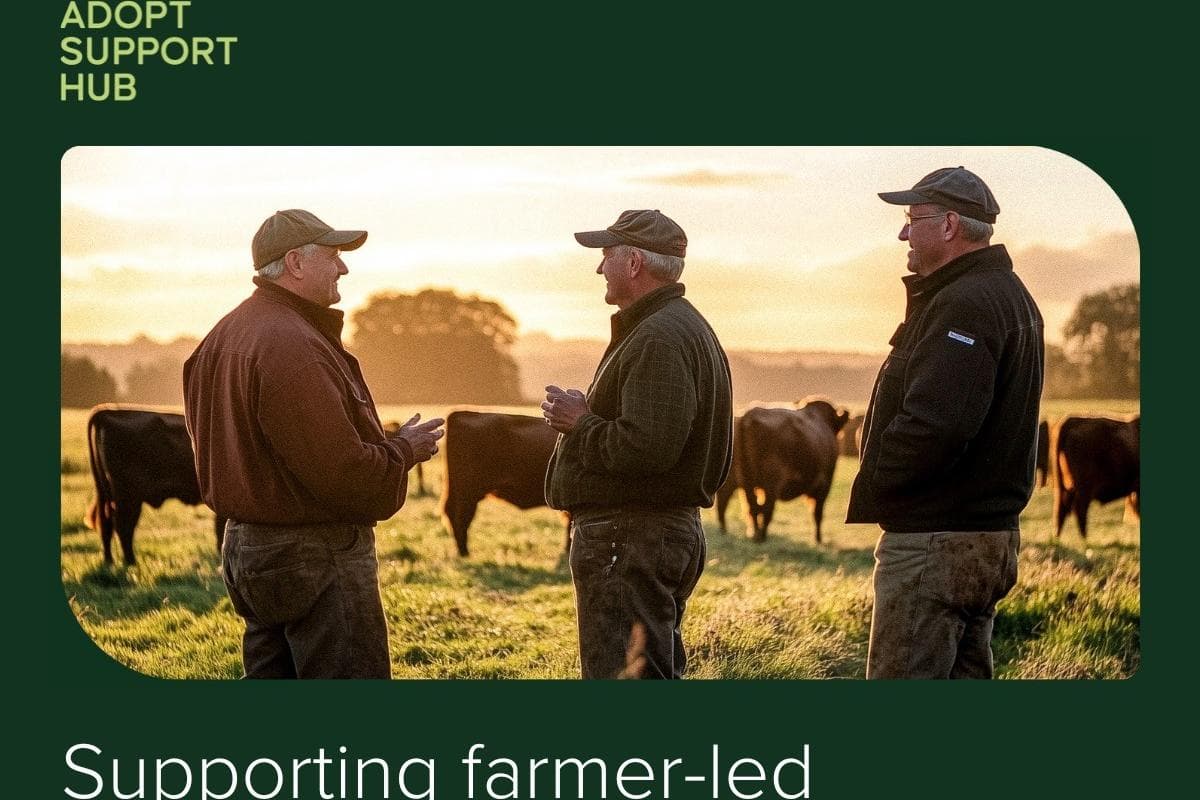
The programme has generally landed well – we’re hearing from researchers and tech developers who are optimistic that ADOPT will help them get their device, platform, product or service into the hands of farmers. Farmers already collaborating with innovators are pleased to have a de-risked mechanism to potentially increase their use of agri-tech. And it’s great to be able to tell the world that the UK is – yet again – committing serious public investment into farmer adoption of technology.
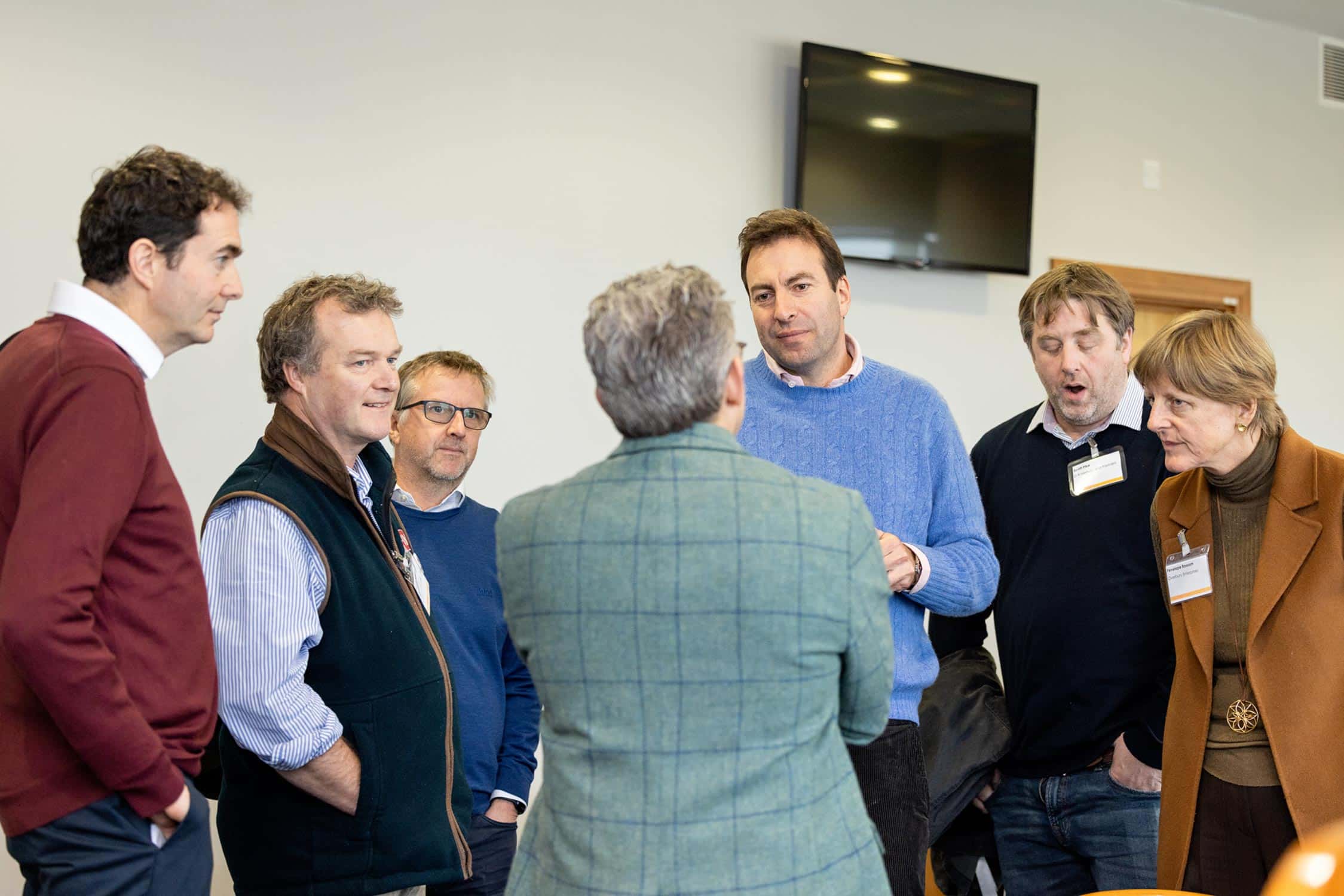
We’re having approaches from those looking for partners and also enquiries about the suitability of potential projects for the scheme. (Please note there is a Support Hub hosted by ADAS to help!).
What we haven’t seen as much of is farmers asking for solutions to their specific needs. It still feels pretty “tech-push”, rather than “farmer-pull.” The support portal is awash with people and technologies offering solutions, which is a fantastic testament to the breadth and depth of UK agri-tech.
But there are far fewer farmers and growers asking for specific tech solutions.
What does success look like?
For the programme, a lot of great partnerships seeking support will most likely be the first Key Performance Indicator. Another will be that those successful projects make a real difference on-farm – helping create higher value jobs, increasing efficiency and productivity.
For researchers and tech developers, this is a route to impact and ultimately commercial success. The latter are reporting their investors want to see a commercial decision by a farmer to buy their innovation, rather than being supported by grant-funding. “De-risking” by the public purse shouldn’t descend into “grant junkie-dom” – which spooks investors if it goes on for too long.
Longer term this could lead to export success, international partnerships, business growth and progress towards net zero goals.
Ultimately, we would hope this programme ends up with real, commercial impact for both farmers and tech developers.
Happy ADOPTing!
Post Overview
Agri-TechE Related Posts

Norwich Research Park companies pass £100m investment milestone
ADOPT Funding for on-farm innovation

Are we the change we wish to see in the world?
farmdrive Wins Innovation in Agriculture Award
UK Precision Breeding Act – transforming crop development and food security